


Abuja, February 13, 2026 – The Rescue Nigeria Alliance (RNA) has strongly condemned the National Assembly’s decision to reject mandatory real-time electronic transmission of election results in the amended Electoral Act, describing it as a serious setback for Nigeria’s democracy ahead of the 2027 general elections.

In a press conference in Abuja today, Friday, and a press statement issued thereafter, and signed by its National Chairman, Dr. Basil Nwolisa, the Publicity Secretary, Chief Tochukwu Ezeoke, the group said the 2027 polls would constitute a defining test of Nigeria’s democratic credibility and warned that any attempt to weaken transparency could destabilise the country.
The criticism follows a five-hour clause-by-clause consideration of 155 clauses in the Electoral Act amendment bill by the National Assembly, during which lawmakers reduced the timeline for the Independent National Electoral Commission (INEC) to publish notice of election from 360 days to 180 days. However, the bill stopped short of making real-time electronic transmission of polling-unit results mandatory.
Instead, the amended law retains a discretionary provision allowing electronic transmission, rather than compelling immediate upload of results to INEC’s official portal.
The Alliance faulted the move, arguing that Nigerians demanded enforceable transparency to eliminate the possibility of manipulation during manual collation of results.
The group also referenced comments by Senate President, Godswill Akpabio, who clarified that electronic transmission had not been removed from the law but preserved in its earlier form. RNA, however, maintained that retaining discretion instead of establishing compulsory real-time upload amounts to a retreat from transparency.
According to the statement, “Nigerians did not ask for ambiguity. They asked for real-time, enforceable transparency that protects their votes.”
The Alliance further linked electoral credibility to broader governance concerns, citing insecurity, economic hardship, and declining public trust in institutions. It warned that weakening electoral safeguards in an already tense environment could fuel deeper distrust and possible unrest.
Describing credible elections as “the last peaceful rescue route available to this country,” the group insisted that transparent polls are critical to restoring public confidence in leadership.
RNA also disclosed that it had been engaged in protests since Monday, February 9, and called on Nigerians to resume peaceful civic action from February 16 at the National Assembly complex in Abuja and at other designated locations nationwide.
The group outlined three key demands: mandatory real-time electronic transmission of polling-unit results; full protection of INEC’s institutional independence and technological safeguards; and rejection of any provisions in the harmonised version of the bill that weaken transparency.
It further called on members of the joint Senate–House harmonisation committee, co-chaired on the Senate side by Niyi Adegbonmire and including Tahir Monguno, Adamu Aliero, Orji Kalu, Abba Moro, Asuquo Ekpeyong, Aminu Abass, Tokunbo Abiru and Simon Lalong, to ensure that the integrity of the electoral process is upheld.
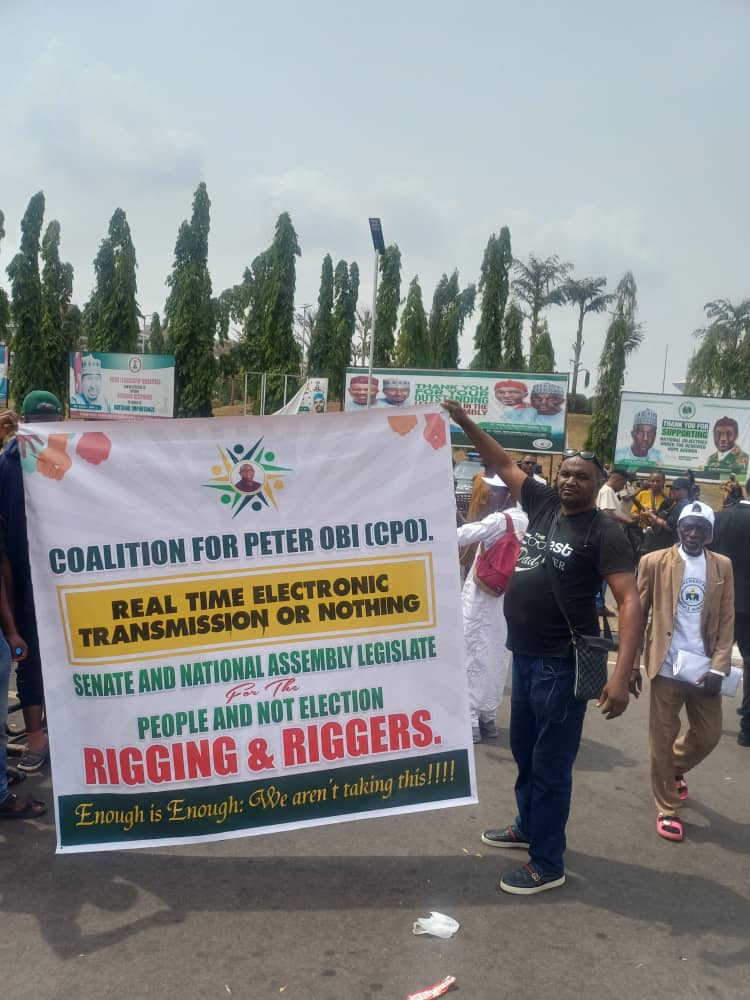
The Alliance emphasised that its call was for lawful, peaceful and constitutional mass action, urging citizens, civil society organisations, professional groups, labour unions and youth groups to participate responsibly.
As preparations for the 2027 general elections intensify, debates over electoral reforms, particularly the use of technology in transmitting results, are expected to remain central to Nigeria’s political landscape.